
Egypt NTRA Certification丨Egypt GOEIC Certification丨Nigeria SONCAP Certification丨Nigeria NCC Certification丨 Kenya COC Certification丨Zanzibar PVOC Certification丨Kenya CCK Certification丨Kenya PVOC Certification丨South Africa ICASA Certification丨South Africa SABS Certification丨South African NRCS Certification丨Morocco COC Certification丨Tanzania TCRA Certification丨Mozambique INCM Certification丨Algeria ARPT Certification丨Sierra Leone NATCOM Certification丨Uganda UCC Accreditation丨Botswana BTA Certification


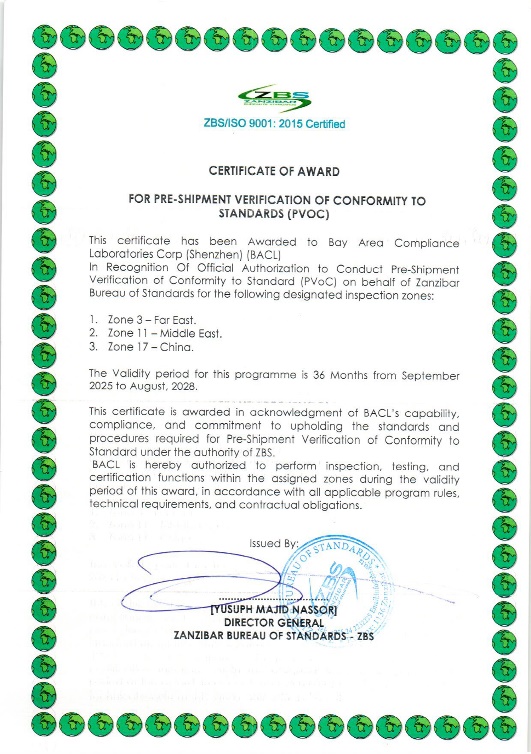
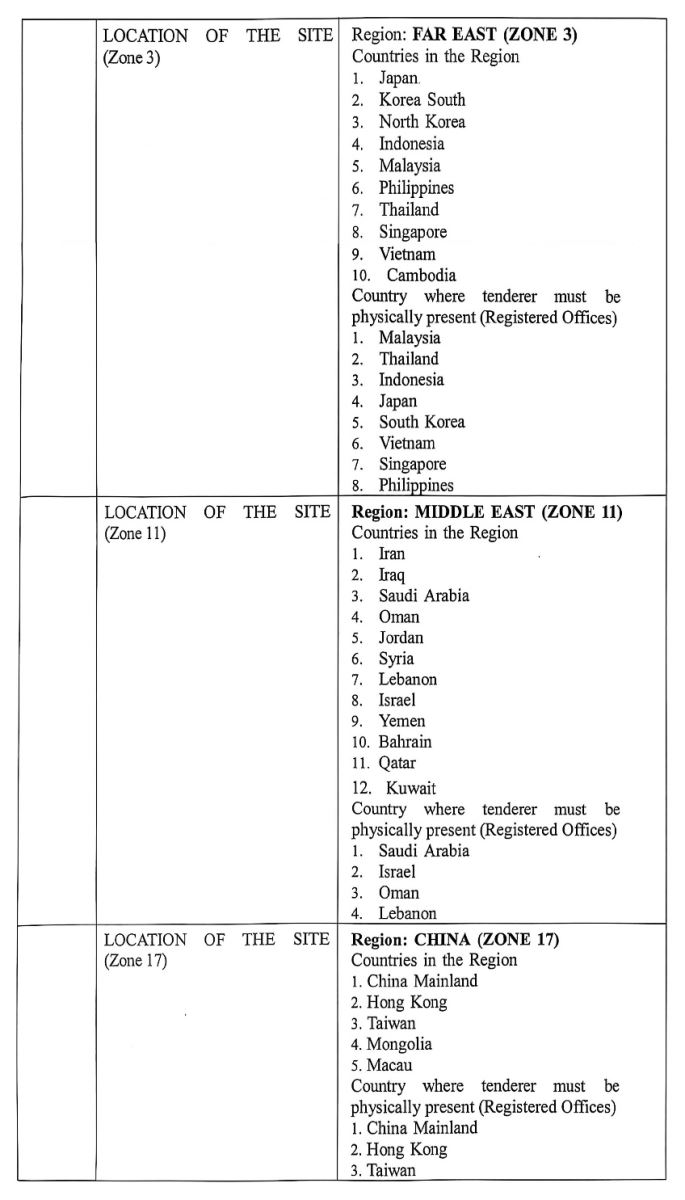
Since November 1, 2016, the Zanzibar Bureau of Standards (ZBS) has implemented the Verification of Conformity (PVoC) program. All exporters to Zanzibar must ensure their products undergo assessment and certification through the PVoC program before customs clearance at the port of entry. As an internationally recognized third-party testing and certification organization, BACL was officially authorized by ZBS in September 2025 to become the PVoC CoC issuing body for all general goods exported to Zanzibar from China (including Hong Kong, Macao and Taiwan), Japan, South Korea, North Korea, Mongolia, the Middle East and Southeast Asia. This can efficiently help manufacturers enter the Zanzibar and even the entire East African market!

★ BACL Zanzibar PVoC Exclusive Authorized Regional Certificate:
★ BACL Zanzibar PVoC Exclusive AuthorizationArea:
Control List:
The Zanzibar PVOC program covers twelve categories of goods, including toys, electronic and electrical products, automobiles, chemicals, etc. These goods must undergo conformity assessment and obtain CoC certificates when exported to Zanzibar
exemption list:
Personal belongings, certified products from EAC member countries, motor vehicles and goods with FOB value of no more than 1000 US dollars are exempt. Exporters need to confirm whether their products meet the exemption conditions (EAC: a regional international organization composed of eight countries, Kenya, Uganda, Tanzania, Burundi, Rwanda, South Sudan, the Democratic Republic of the Congo and Somalia)
Application preparation:
ZBS PVOC: Main Steps and Introduction
The Zanzibar PVOC certification includes five key steps: submission of documents, document review, payment confirmation, on-site inspection/supervision of loading, and issuance of CoC certificate, all of which are closely connected. Exporters can directly log in to the BACL online application platform to submit documents through Exporter Portal: https://exporter-portal.baclcorp.com.cn
Platform Guidelines
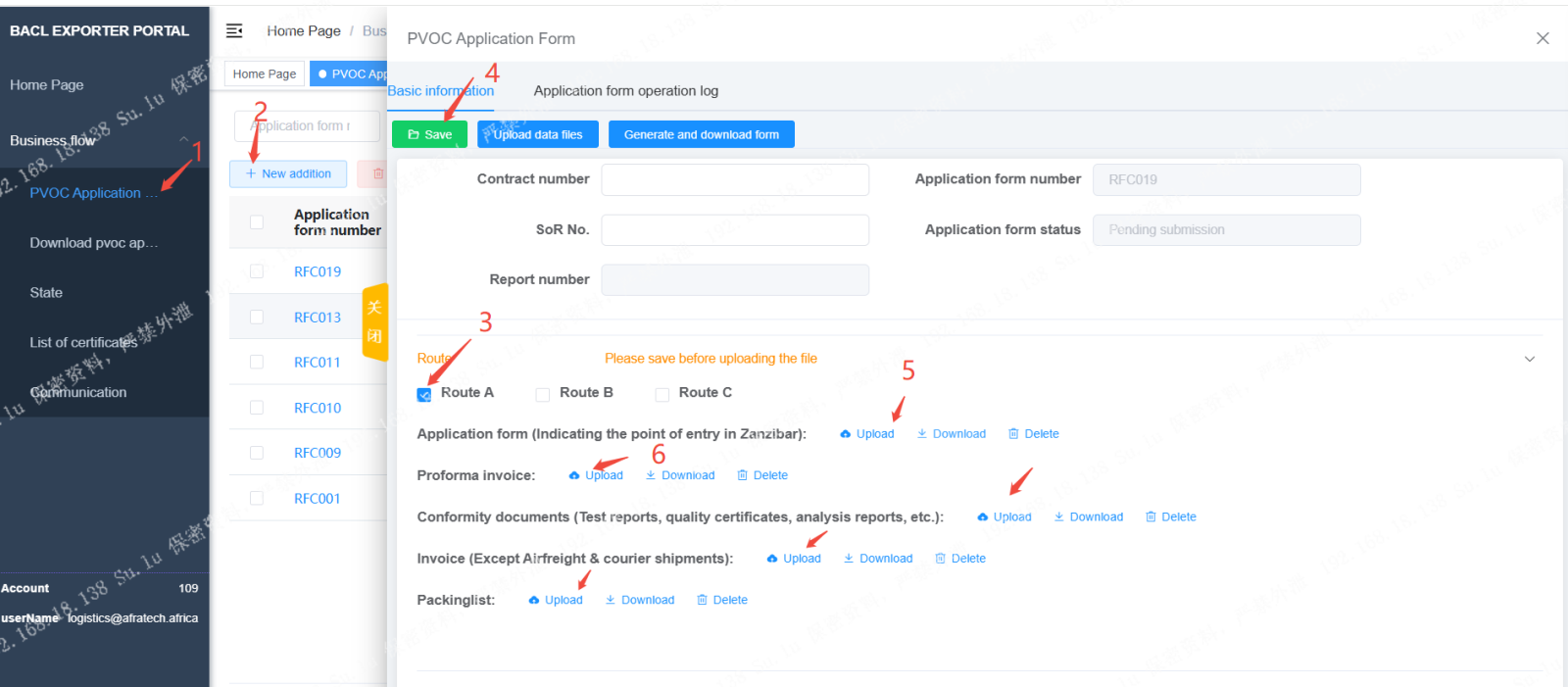
1- Exporter operation process
1. Registration, data upload, and preliminary processing. Exporters complete system registration, then upload forms through the system, and the system automatically recognizes the data. they can choose to fill out the form online or download it and upload it after filling it out.
2. Data review and exception handling Data is normal: proceed directly to step 3. Data exception: The system records the exception and updates the status. Exporters need to fill out the application form online and upload supplementary documents (which can be confirmed through non real time communication with BACL).
3. Inspection and Payment After the exporter makes payment, the system assigns inspectors to inspect the goods. The inspector conducts on-site inspection and uploads inspection records and reports.
4. Certificate Confirmation and Acquisition After the inspection data is reviewed, a COC draft is generated and the exporter confirms it online.
2-Inspector (ZBS) Operating Procedures
1. Task Receiving and Inspection
After the system assigns an inspection task, the inspector conducts on-site inspection and records data.
2. Data Upload and Review
The inspector uploads the inspection records and report, and the system reviews the data.
Data Normal: Proceed directly to step 3.
Data Abnormal: Record the abnormality and update the status; supplementary materials are required for re-review.
3. Certificate Generation and Status Update
After approval, the system generates a draft COC certificate, and the status is updated to "Pending Confirmation."
After official certificate confirmation, the status is updated to "Completed."
4. Query and Download
Inspectors can query the status of all records under their national account online and download the generated certificates.
3-ZBS PVOC Portal System Function Summary
● Access: BACL exporter ZBS has third-party access
● Status tracking: Users (exporters/inspectors) can view the real-time status of all records at any time.
● Online interaction: supports non real time communication with BACL (such as feedback when data is abnormal).
● Automation: Data recognition, status updates, and certificate generation are all automated.
● Tracking Audit: Official Regular Audit Database and All Records
Zanzibar Certification Documentation Requirements:
1. Application Form
2. Proforma Invoice
3. Conformity Documents (Test Report + ISO 17025 accreditation scope of the certification laboratory)
4. Official Invoice
5. Packing List

Basic Certification Information:
• Is it mandatory: yes
• Regulated products: wireless communication products
• Factory Inspection: None
• Certificate Validity Period: None
• Local Agent: Required

Basic Certification Information:
• Is it mandatory: yes
• Regulated products: wireless communication products
• Factory Inspection: None
• Certificate Validity Period: None
• Local testing: no
• Local agent: not required
Basic Certification Information:
• Is it mandatory: yes
• Regulated products: wireless communication products
• Factory Inspection: None
• Certificate Validity Period: None
• Local testing: yes
• Local agent: not required
Basic Certification Information:
• Is it mandatory: yes
• Regulated products: security/wireless/communication products
• Factory Inspection: None
• Certificate validity: 2 years
• Local testing: no
• Local Agent: Yes
Basic Certification Information:
• Is it mandatory: yes
• Regulated products: wireless communication products
• Factory Inspection: None
• Certificate validity: 8 years
• Local agent: not required

Basic Certification Information:
• Is it mandatory: yes
• Regulated products: wireless communication products
• Factory Inspection: None
• Certificate Validity Period: None
• Local testing: no
• Local agent: not required
Certification Introduction:
Controlled products exported to Morocco must comply with Morocco's technical regulations and standards, and must obtain a COC certificate in order to successfully clear customs and enter the Moroccan market. For controlled products that need to apply for and obtain a COC certificate before exporting, traders must verify the controlled products before exporting and obtain a COC conformity certificate to verify that the product complies with Morocco's local technical regulations and standards.
Previously, Morocco implemented a transitional policy: for some products that did not obtain the COC conformity certificate before export, the Moroccan government accepted the inspection and verification after arrival at the port. This transition policy ends on December 31, 2020.
Product Control List:
• Electrical Appliances
• Other Electrical Products
• Construction Materials (Pipes, Sheets, Sanitary Equipment, Insulation, Wooden Panels, Cement, Windows, Glass...)
• Gas/Oil Appliances
• Toys, Parks and Baskets for Children, Baby Diapers, Furniture
• Textiles, Shoes, Leather, Clothing
• Chemical Products (Detergents, Paint, Bitumen, Matches, Lighters ...)
• Plastic Products
• Products in Contact with Food (Kitchenware, Crockery...)
• Personal Protective Equipment (PPE), Helmets for Motorcycles
• Automotive Spare Pparts (Tyres, Automotive Parts)
• Others
Identification requirements
In order to prove that the product complies with Morocco's technical regulations and standards, guide consumers to purchase, and help the government to strengthen effective control, technical products subject to Law No. 24-09 can only enter the Moroccan market with a clear CMim logo. According to Decrees No. 2573-14 (Electrical Safety), No. 2574-14 (Electrical Strip Card Track Compatibility), No. 2575-14 (Toy Safety) and No. 3228-13 (Marking) Products implement mandatory CMim labelling requirements.
Identification requirements:
1. The CMim logo is reflected on the product, at least 6mm in height;
2. If the product is too small to meet the 6mm requirement, the CMim logo can be placed on the outer packaging and instruction manual (in the form of silk screen printing, stickers, etc.);
3. The CMim logo can be viewed on the MICEVIN website.
Other:
• Power supply voltage: 220V/50Hz (accepts wide voltage and frequency);
• Plug/Socket: Type E/C;
• Labeling requirements:
(1) Arabic is used on the nameplate and instruction manual;
(2) The CMim certification mark is affixed to the product.
Certification Introduction:
The South African National Mandatory Norms Implementation Act (Act 5 of 2008) was promulgated in Government Gazette 31216 on July 4, 2008, and enforced on September 1, 2008, under the control of the South African agency NRCS. NRCS is the abbreviation of National Regulator of Compulsory Specification. The full name in Chinese is the National Mandatory Requirements Management Department. Its predecessor was the SABS-certified regulatory department, and later it has become an independent department. All electrical and electronic products that meet the requirements, whether exported or sold in the South African market, must apply to NRCS for a power of attorney as a customs clearance and sales pass.

Certification Category
• NRCS (LOA): Import License (Safety, Mandatory), must have a local agent in South Africa.
• EMI Certificate (CoC): Certificate of Conformity (EMI, Mandatory).
Standard Test
• Safety: IEC, SABS/SANS
• EMI: IEC, EN, CISPR, SABS/SANS
Applicable Product Range:
The electrical and electronic products included in the mandatory specifications are divided into the following five categories:
1. Household and similar products
2. Information technology products
3. Electronic entertainment equipment
4. Handheld power tools
5. Wire and cable
South African Certification Body Instructions:
The certification of electrical and electronic products is mainly divided into two aspects: safety regulations and electromagnetic compatibility. For safety, you must obtain LOA (Letter Of Authority) certificate, and for electromagnetic compatibility, you need to obtain COC (Certificate Of Compliance) certificate. The following is an explanation of important terms:
1. NRCS: It is the issuing authority of the LOA certificate.
2. SABS: It is the issuing body for COC certificate and SABS mark certification. The South African Bureau of Standards SABS (South African Bureau of Standards) is responsible for the braking of South African standards, as well as certification and testing.
3. LOA certification: Letter Of Authority, for security.
4. COC certification: Certificate Of Compliance, for EMC.
5. SABS certification: This certification is voluntary. The requirements are relatively strict, requiring the South African Bureau of Standards (SABS) to arrange factory inspection and testing, and there will be two annual audits every year after the certification.
Comparison of NRCS and SABS

Certification Introduction:
The South African Bureau of Standards (SABS) was established in accordance with the National Standards Act promulgated in 1945 and is subordinate to the South African Ministry of Trade and Industry. SABS is a neutral third-party certification body in South Africa, responsible for system certification and product certification in South Africa. In addition to the responsibilities of setting standards, SABS also represents the national management standard and grants the right to use the logo for products that meet the standard. SABS Mark has been widely used in various fields and has become a symbol of product quality assurance.

According to the requirements of the South African National Bureau of Standards SABS, only the EMC report issued by the laboratory authorized by the A-Lab program can be used to apply for the EMC CoC certificate issued by SABS. On May 12, 2021, BACL was successfully approved to become the A-Lab program authorized laboratory of SABS in South Africa, which means that the EMC report issued by BACL can be directly used to apply for the SABS EMC CoC certificate.

The scope of BACL's accreditation by SABS is as follows:

Authentication Basic Information
• Is it mandatory: yes
• Regulated Products: Electrical and Electronic Products
• Factory Inspection: None
• Certificate validity: 3 years
• Local testing: No
• Local agent: not required
BACL can also provide one-stop services for export to Egypt, other African countries, the Middle East, Asia, America and other global international certification, including EMC, RF, safety, energy efficiency, reliability, physical and chemical testing, certification and local agent services!
Certification Introduction:
South Africa's independent communications authority (ICASA, which is the regulator of South Africa's national broadcast communications and postal services), all wireless products must obtain ICASA certification before entering the South African market. For wireless communication equipment exported to the South African market, it is necessary to apply for type certification to the Independent Communications Authority of South Africa (ICASA), and it can be sold only after the approval. This is also equivalent to the approval of domestic network access models to apply for ICASA certification in South Africa. It should be noted that ICASA certification can only be issued to local registered companies or representative offices in South Africa. Therefore, it is best for domestic manufacturers to apply for ICASA by local importers, but the test can be done domestically.

Authentication Basic Information:
• Is it mandatory: yes
• Regulated products: wireless communication products
• Factory Inspection: None
• Certificate Validity Period: None
Applicable Product Range:
ICASA certification puts forward requirements on product technology and functions, as well as equipment safety and electromagnetic compatibility, and is mainly applicable to the following products:
• Large telecommunication systems;
• Telecommunications network equipment;
• Wireless paging equipment;
• Digital Enhanced Wireless Telecommunications (DECT) equipment;
• Telecommunication systems (GSM and DCS);
• terrestrial sound broadcasting service signal transmitter;
• Commercial amateur radio equipment;
• cellular mobile phones and portable wireless devices;
• ADSL transceiver;
• ISDN;
• Marine wireless equipment and services;
• Point-to-point digital fixed wireless systems;
• Cordless telephone equipment.
Certification Stage:
Certification consists of the following three phases:
1. Testing of the performance in accordance with the applicable technical standards;
2. Testing of electromagnetic compatibility (EMC) - both emission and immunity measurements EMC testing - EMI and EMS;
3. Testing of safety.
Provisonal Type Approcal- Use of Equipment for Trial, Demonstration or research purpose on non-commercial basis

 CN/中国
CN/中国  US/USA
  KR/Korea
  DE/Germany
  ES/Spain
 VN/Việtnam