
 CN/中国
CN/中国  US/USA
  KR/Korea
  DE/Germany
  ES/Spain
 VN/Việtnam
The update safety standard AS/NZS 61347.1:2016+ a1:2018 was issued by Australian Standards Committee on March 22, 2018, and will be enforced from March 23, 2019.
This update mainly increases the classification, definition and related test requirements for independent drivers which is used close to or covered by thermal insulation cotton. The detailed interpretation is as follows:
Classification and definition of independent drivers
Independent drivers shall be defined as one of the following three types:
1. Do-not-cover
Mark:
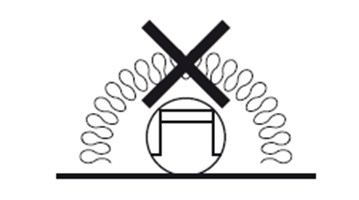
Application: Independent driver can be used in places with flammable materials during normal use. It can be close to but not covered by insulating wool.
Minimum size: 5mm × 5mm, it can be scaled up equally.
2. IC
Mark:
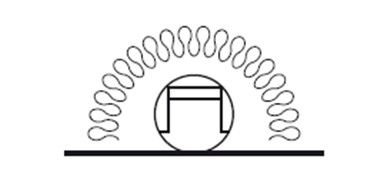
Application: Independent driver can be used in the normal use of flammable materials, can be close to and covered with heat-resistant cotton.
Minimum size: 5mm×5mm, it can be scaled up equally.
3. Non IC
Mark: Not required
Application: Independent driver shall not be used close to and shall not be covered by thermal insulation cotton. It shall not be used in places with inflammable materials because the ceiling is made of wood in Australia.
General independent driver is usually for household use or being used in general lighting occasion, and is rarely used in industrial occasions. Since Non IC is apply to industrial occasions, it is not belong to general independent driver. The general household independent driver can be selected from Do-not-cover and the IC. Since the Do-not-cover and Non IC drivers cannot be covered by insulating wool during normal use, the user manual shall provide installation instructions and schematics indicating the distance from the top and the periphery of the driver to the flammable material.
Testing Requirements
Temperature Rising Test Box Specifications:
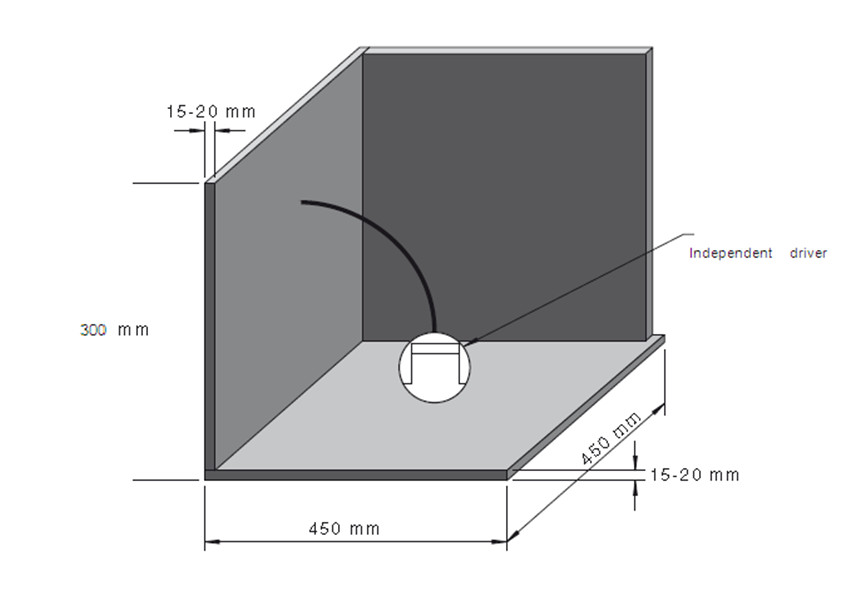
The Request of Temperature Rising Test:
1. Testing requirement of "Do-not-cover"
◆ Normal Temperature Rising Test:
The driver is installed on the test angle with 1.06 times input voltage, measured at the maximum ambient temperature, the temperature of the component does not exceed the rating during normal operation, the temperature of the case does not exceed 90 ° C, the temperature of the mounting surface is not more than 90 ° C.
◆ Abnormal Temperature Rising Test:
The driver is installed on the test angle with 1.06 times input voltage, install the driver in the temperature rising test box above and cover it with insulating cotton. When the product is in normal operation, the temperature of the outer casing does not exceed 130 ° C, and the temperature of the mounting surface does not exceed 90 ° C.
2. Testing requirement of "IC"
No difference between normal temperature rise and abnormal temperature rise, both are measured at the maximum ambient temperature, the driver is installed in the temperature rise test box above with 1.06 times input voltage, covered with insulation cotton, the case temperature does not exceed 90 ° C, the mounting surface The temperature does not exceed 90 °C.
Service Advantages of BACL:
BACL can provide you with efficient and reliable US (NRTL, FCC, ENERGY STAR), Canada (ISED, SCC), European Union (CE), Australia (RCM), Korea (KC), Japan (MIC), Singapore (IMDA), Hong Kong (OFCA), Taiwan (NCC, BSMI), Egypt (NTRA), Vietnam (MIC), Saudi Arabia (SASO, CITC), Philippines (NTC), Thailand (NBTC), Malaysia (SIRIM), India (BIS, WPC, TEC) and other certification services to ensure that your products still smoothly enter to international trade market under the background of the increasingly fierce international trade barriers!